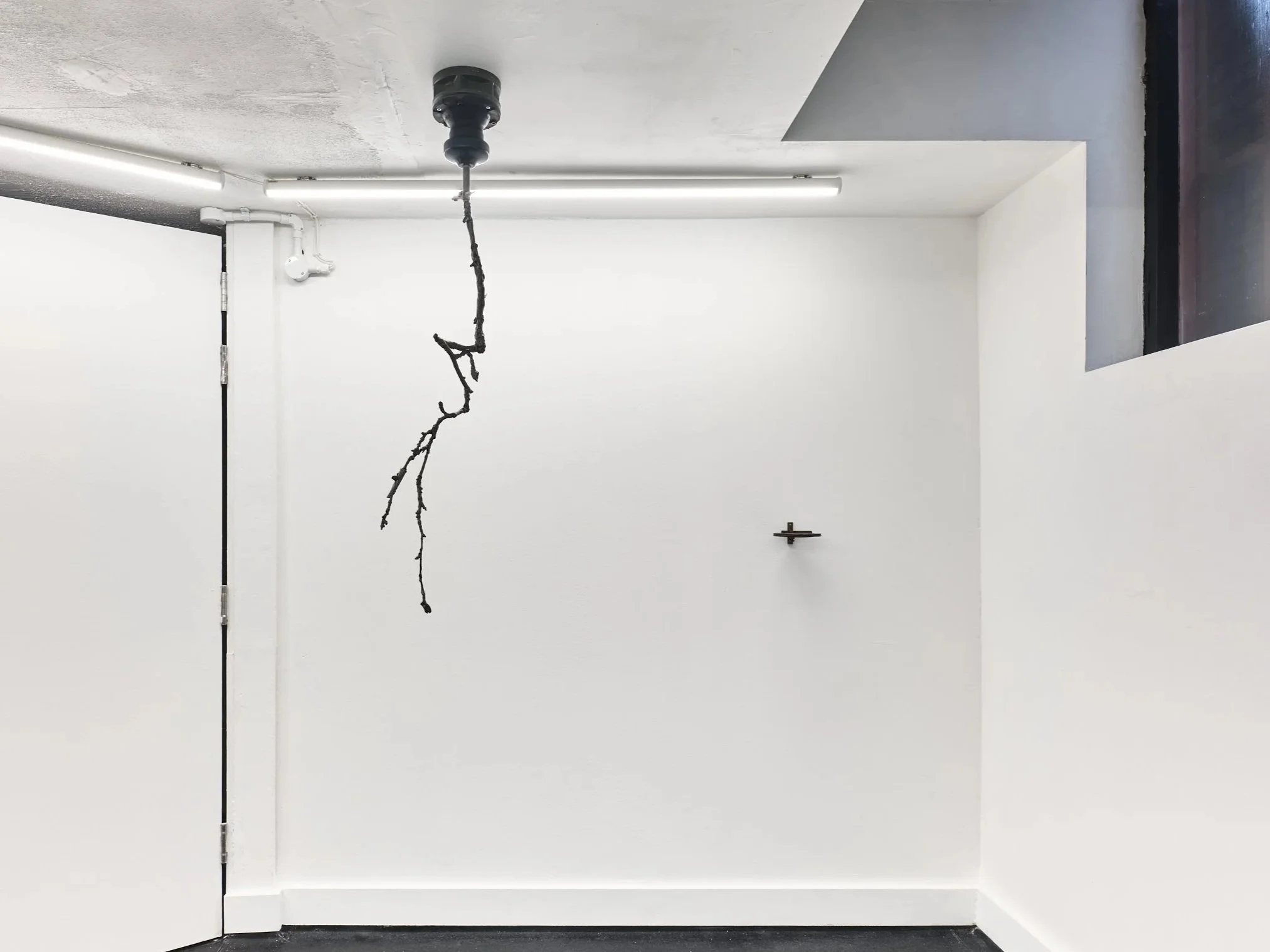
Federico Arani: ‘Study for Dowsing’, Commonage Projects, London, 2025. Curation and text by Séamus McCormack
Federico Arani’s exhibition for Commonage explores an innate relationship with the underground and concealment, a sifting through the past, a reclaiming of the abandoned and an excavation of the uncanny. The works represent a new development in his practice through nickel electroforming, an alchemical and transformative process. Various salvaged artefacts, including lead figures and bullet casings, metamorphosise with organic specimens such as decaying branches and found fossils to become new ageless, transmuted forms – hybrids of the natural and synthetic, the found and hand-crafted. Arani has an egalitarian approach to materials, that have a contradictory extraordinary presence and throw-away absence. The electroplating method creates a shell of each object, a progeny of its origin, preserving before it decomposes or gets lost again for future speculation.
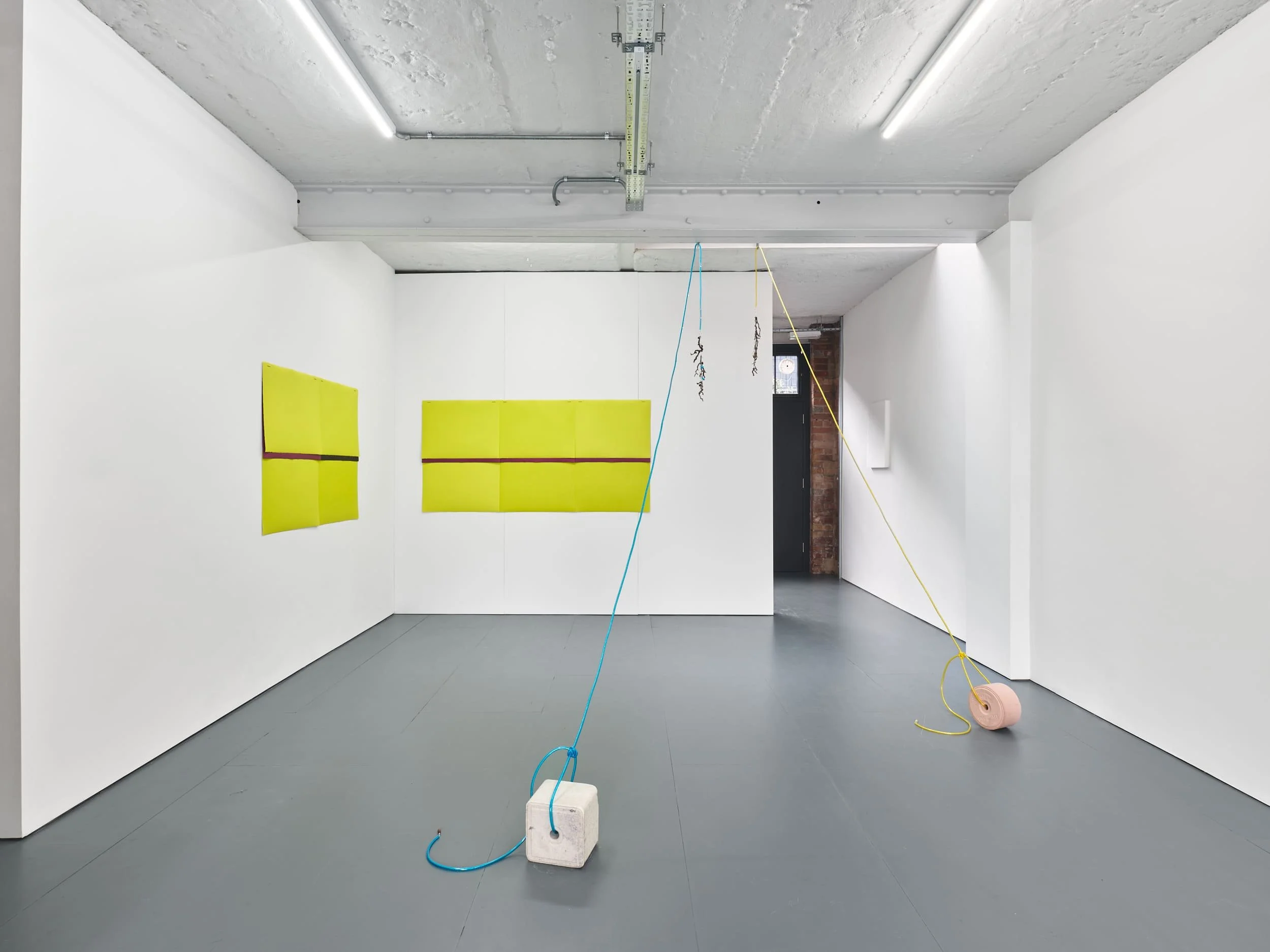
‘As it is’ (Lizzie Munn, Timo Kube, Kate Fahey), No Show Space and Commonage Projects, London. Co-curated with Tina Spear, 2024. Text by Séamus McCormack
The past echoes into the future, its traces haunt our present. ‘As it is’ considers metaphors and representations of subjective experiences of time – its fleeting nature, passing, colliding or yet to come. The exhibition title links to the Japanese philosophy of arugamama, meaning accepting situations for how they are.
Included are works that suggest in-between, ephemeral or metaphysical states, preservation, and deterioration. Through sequential, gradual, or what could be described as alchemical processes, the artists ruminate on time as ethereal, elusive but inevitable. We are invited to slow down and consider the latent energies in the works, revealing the transformative potential and agency of materials.
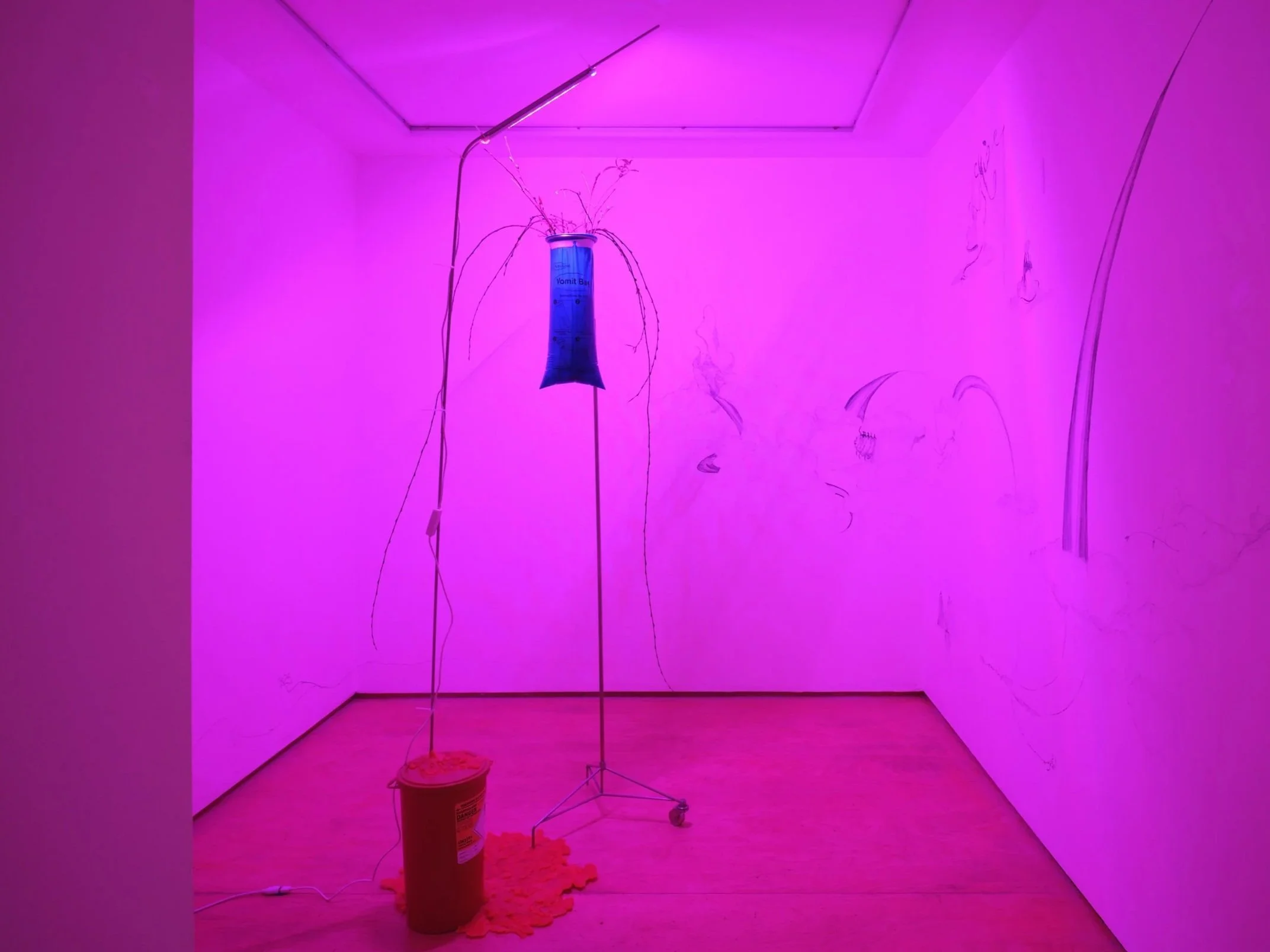
Laura Ní Fhlaibhín: ‘Painkiller’, Commonage Projects, London, 2024. Curation and text by Séamus McCormack
Laura Ní Fhlaibhín sifts stories, materials and traces associated with site, memory and mythology to create complex but pithy material scenarios. She frequently integrates paraphernalia and histories associated with notions of care and healing into sculptural assemblages and drawings. Intertwining narratives from folk traditions, personal experiences and scientific investigations, she creates spaces for restoration and ritual.
For Commonage, Ní Fhlaibhín has designed a nourishing atmosphere in which a cutting from a weeping willow propagates and grows. The weeping willow has been long associated for their healing properties, as the salicin from the bark can be used as a pain reliever as it contains a chemical similar to that in aspirin. By creating this eco-system, Ní Fhlaibhín invites us to consider our entanglements with the natural world and the fusion of magic and science or myth and fact.
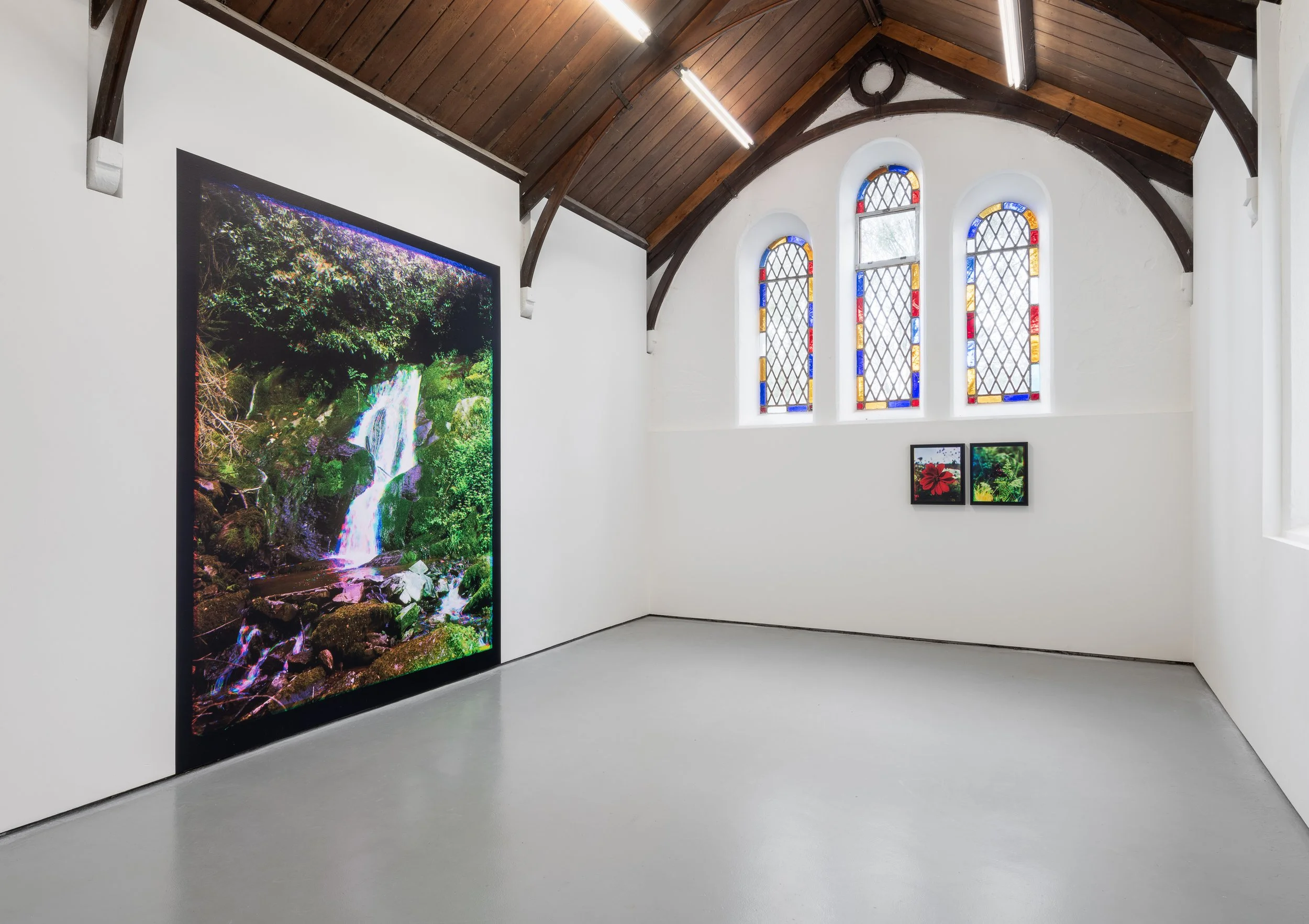
Simone Mudde: ‘Hyper Natural’, Lismore Castle Arts, 2023. Curation and text by Séamus McCormack
For this exhibition at Lismore Castle Arts, Simone Mudde observes the unseen energies of the natural environment. She experiments with colour separation photography - a process where monochrome images are exposed using coloured filters and subsequently layered in the darkroom. The technique, developed in the early 20th century, demands perfect composition and accurate exposure. Mudde plays with this process by allowing alignment issues or glitches of colour to form narratives, and such errors are used to identify the passing of time, the latency of movement, and to further abstract what is perceived by the lens and the eye. Enhancing the colour separation analogue method with digital manipulation, she creates new compositions to further confound how we might read images. Exploring the qualities of the photographic process and stretching its boundaries, Mudde encourages us to consider the labour and methodologies in producing the work.
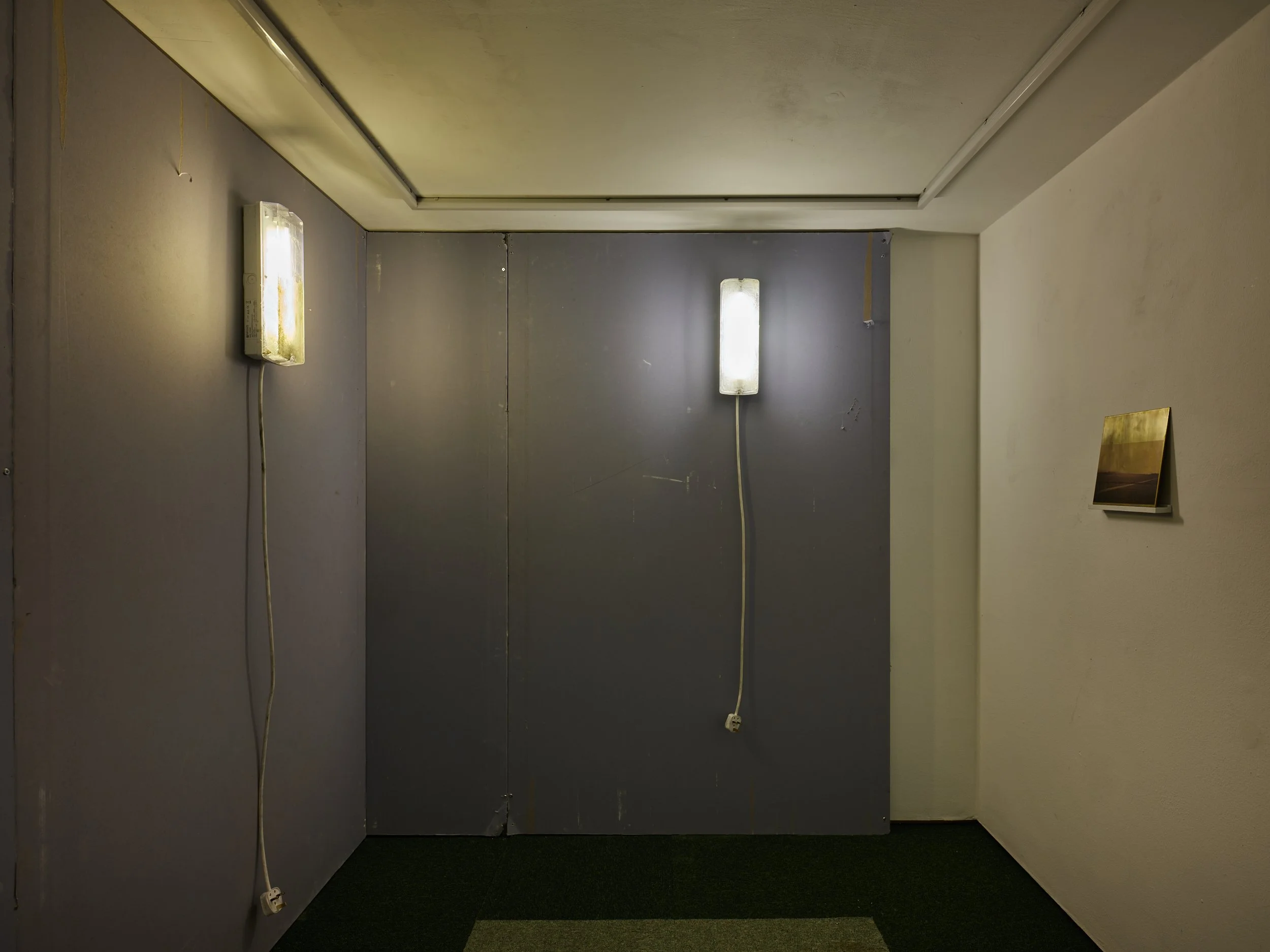
Ali Glover: ‘loose teeth’, Commonage Projects, London, 2023. Curation and text by Séamus McCormack
Ali Glover’s site based interventions consider how architectural infrastructures can shift aspects of behaviour and psychological patterns. The installation for Commonage acts as an intermediary or side space, like that of a page margin, where idle thoughts get passed from the periphery into the main. He is interested in how forms of language (architectural, image or sonic) used in those in-between moments can lead to something from being overlooked to visible.
Glover makes reference to particular aspects of the space by borrowing familiar or institutional elements such as the floor tiles, security lights and exposed stud walls. Articulated through field recordings of hauntings in urban environments, he collapses moments from these actualities into cerebral spaces or daydreams.
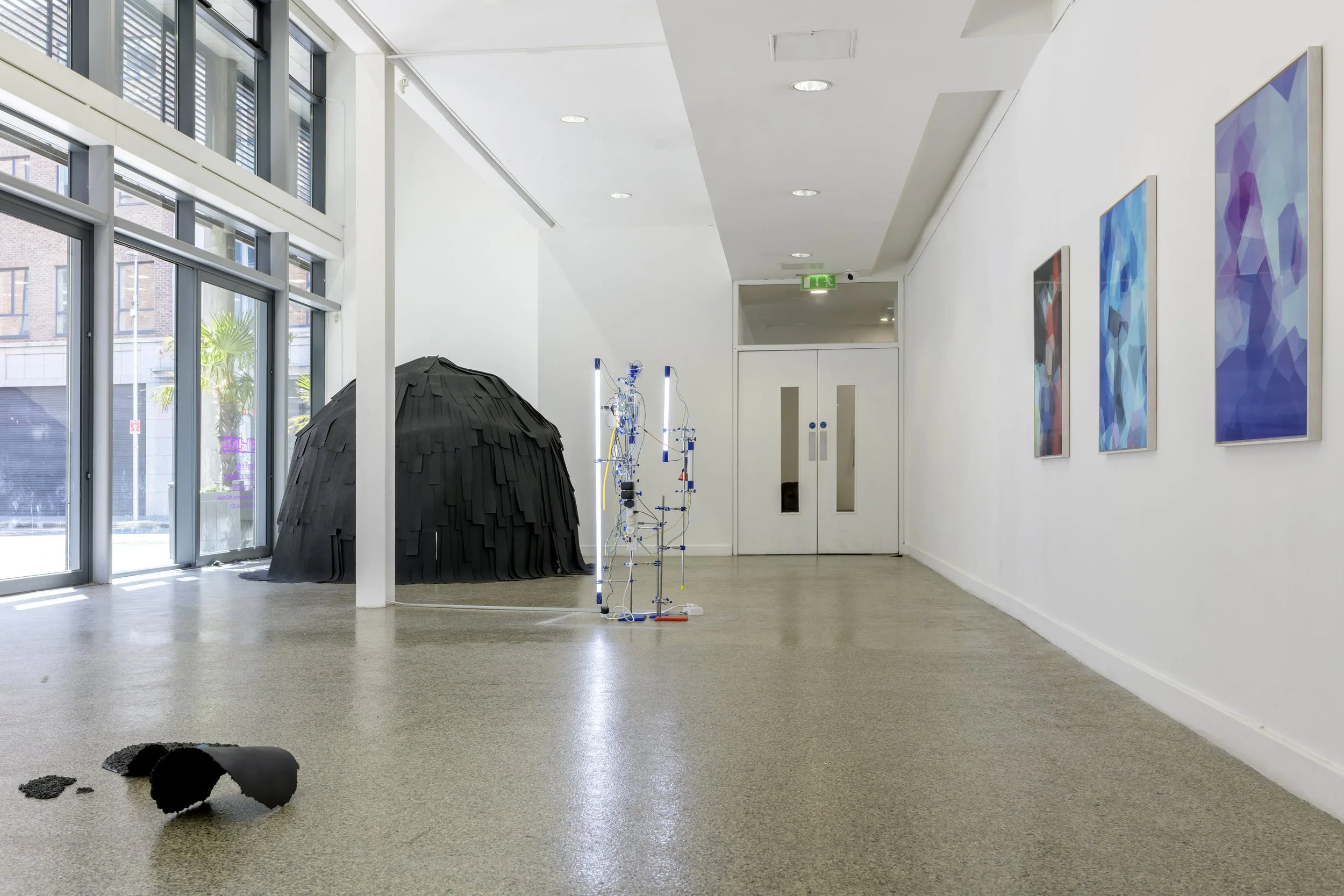
‘em-bracing’, (Kate Fahey, Adam Gibney, Jonathan Mayhew)The LAB, Dublin, 2022. Curation and text by Séamus McCormack
em-bracing investigates how digital technologies can complicate connectivity and detachment, embodiment and disembodiment, and intimacy and distance - thus creating profound effects on the identification of others and of our self.
Through a range of approaches, positions and media, including sculpture, moving image, installation and scent, em-bracing explores the virtual selves' relationship to physical selves by questioning how constantly evolving technologies can (trans) form identity and perception.
We have increasingly recognised ourselves as porous and vulnerable bodies entwined with connections and experiences mediated by non-human or haptic forms of communication. Through the prism of both IRL and URL realities, the works in this exhibition refract and reflect on the complexity of these interconnected experiences.
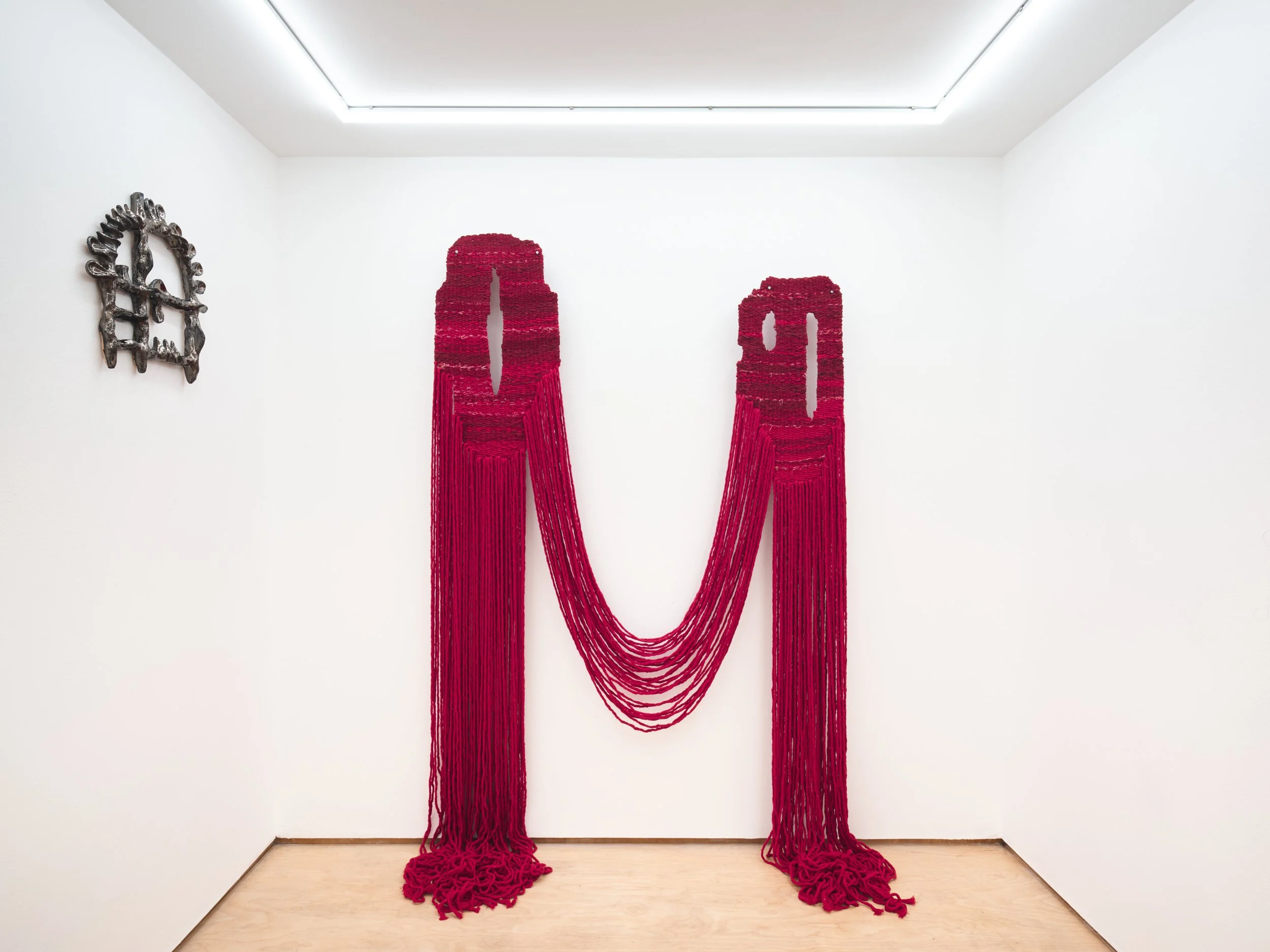
Sayan Chanda: ‘They Speak in a Hundred Ways’, Commonage Projects, London, 2022. Curation and text by Séamus McCormack
For Commonage, Sayan Chanda has reimagined the space as a sanctum sanctorum in which ceramics and textiles are conjured into otherworldly entities and ageless votive offerings. His works serve as totems, portals and talismans that allude to personal histories and inner monologues. Through the laboured methods of weaving, stitching, dying of fibres and the hand forming and firing of clay, these works have spiritual evocations.
The exhibition is Chanda’s first solo exhibition in London and includes two aspects of his practice. Textiles, from the ‘Bohurupee’ and ‘Bhuta’ series, are created using weaving methods and reference Bengali folk masks. They at once conceal and suggest thresholds to alternate beings. Referred to as ‘Shapeshifters’ the ceramics have biomorphic and timeless qualities – ancient relics or futuristic amulets. Chanda has envisioned a contemplative, ritualistic and somewhat foreboding environment that echoes the hymns from multiple tongues.
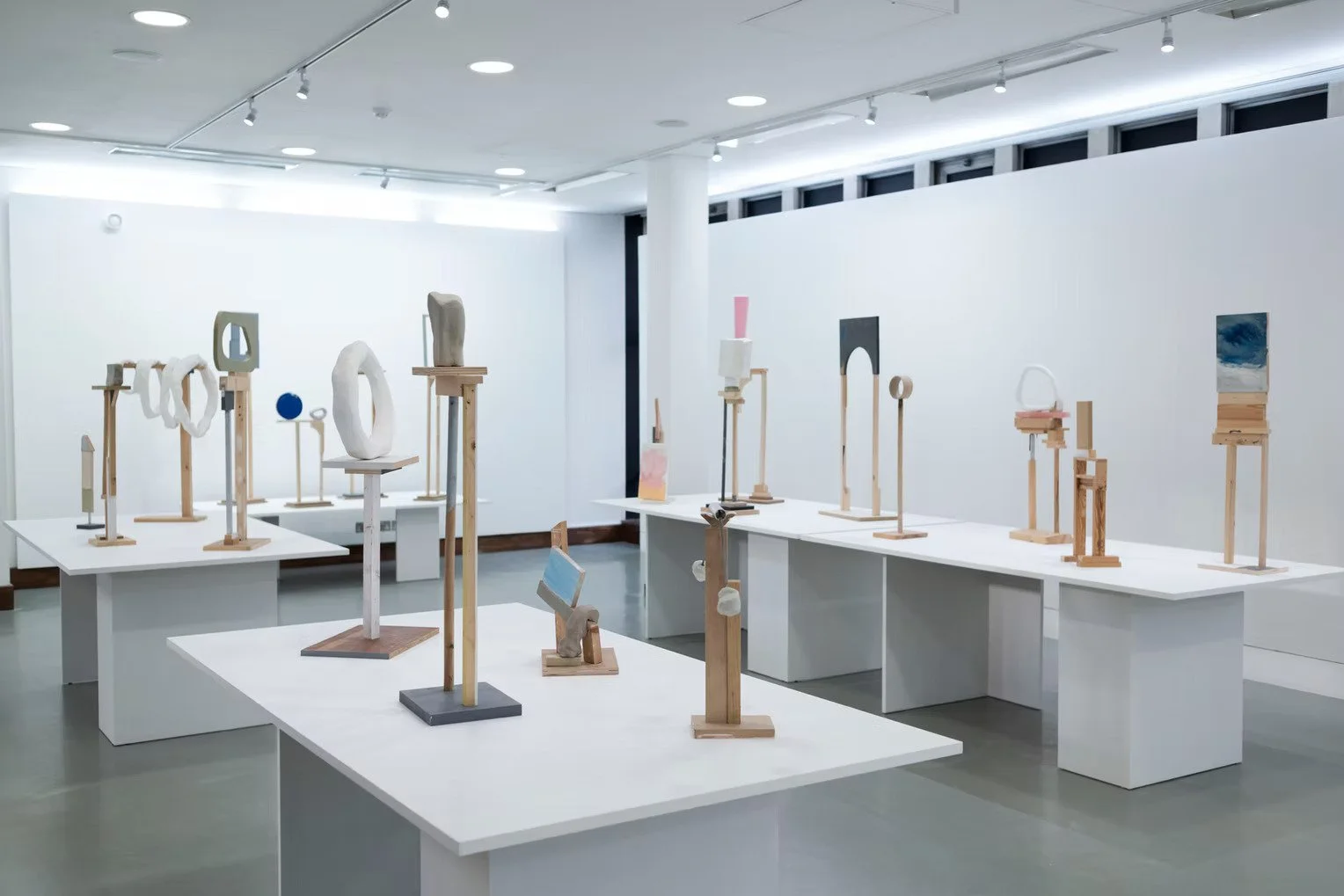
Joe Duggan: ‘Material’, Swiss Cottage Gallery, London, 2021. Curation and text by Séamus McCormack
Joe Duggan’s latest body of work focusing on his sculptural practice demonstrating a keen interest in exploring both metaphysical and material qualities. With an egalitarian approach to materials, Duggan combines recycled and reflective metals with reclaimed wood, cast concrete and moulded plaster to create sculptural constructions through assemblage and juxtaposition. The salvaging of materials, which are often re-appropriated from other artists’ studios, follows in a lineage of postmodernist or Arte povera approaches by reusing humble, everyday and throwaway materials. The structures he has assembled come from multiple references: forms that we encounter through urban/rural architectures; figuration; troupes from art- historical predecessors. These objects and their foundations become metaphors that reveal but also confound any sense of knowing or familiarity. There is a deliberate joyful ambiguity and elements of humour at play in how we may read the work or in its production. The materials employed may have waited in the artist’s studio or even have been discarded by another, to be juxtaposed and harmonised into new symbiotic relationships that resist categorisation.
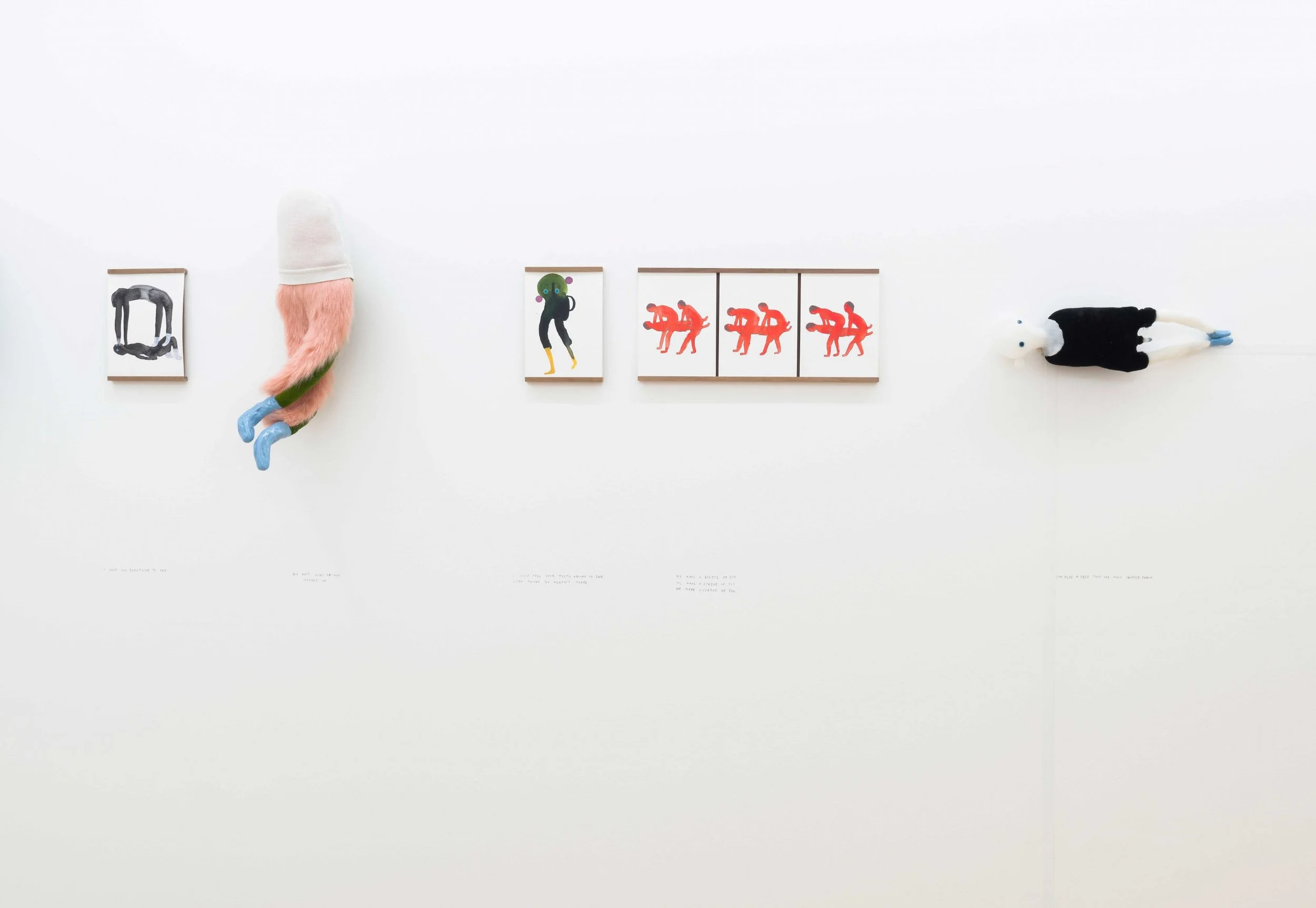
Tim Spooner: ‘A Wave in a Cave’, Commonage Projects, London, 2021. Curation and text by Séamus McCormack
The exhibition includes a new series of sculptures and drawings that are explorations into unpredictability, the irrational and exercises in balancing control. Demonstrating a unique handling of materials, including textiles, watercolours, electronics and plastics, Spooner also utilises text to encourage a range of incongruous readings: menacing, sensual, carnal, educational, absurd, comical, morose….
A series of wall-based sculptures that scratch and twitch, investigate kinesics to embody a variety of sensations, revealing anthropomorphic qualities through the combination of alluring elements. In the drawings, which make use of repetition but with slight variation, figuration tussles with hybrid identities and contradictory functions, knotting the familiar with the fantastical, peculiar, humdrum and somewhat macabre. As Spooner describes: “Each new picture or object was the seed for making the next one so that the process could be self-propelling.
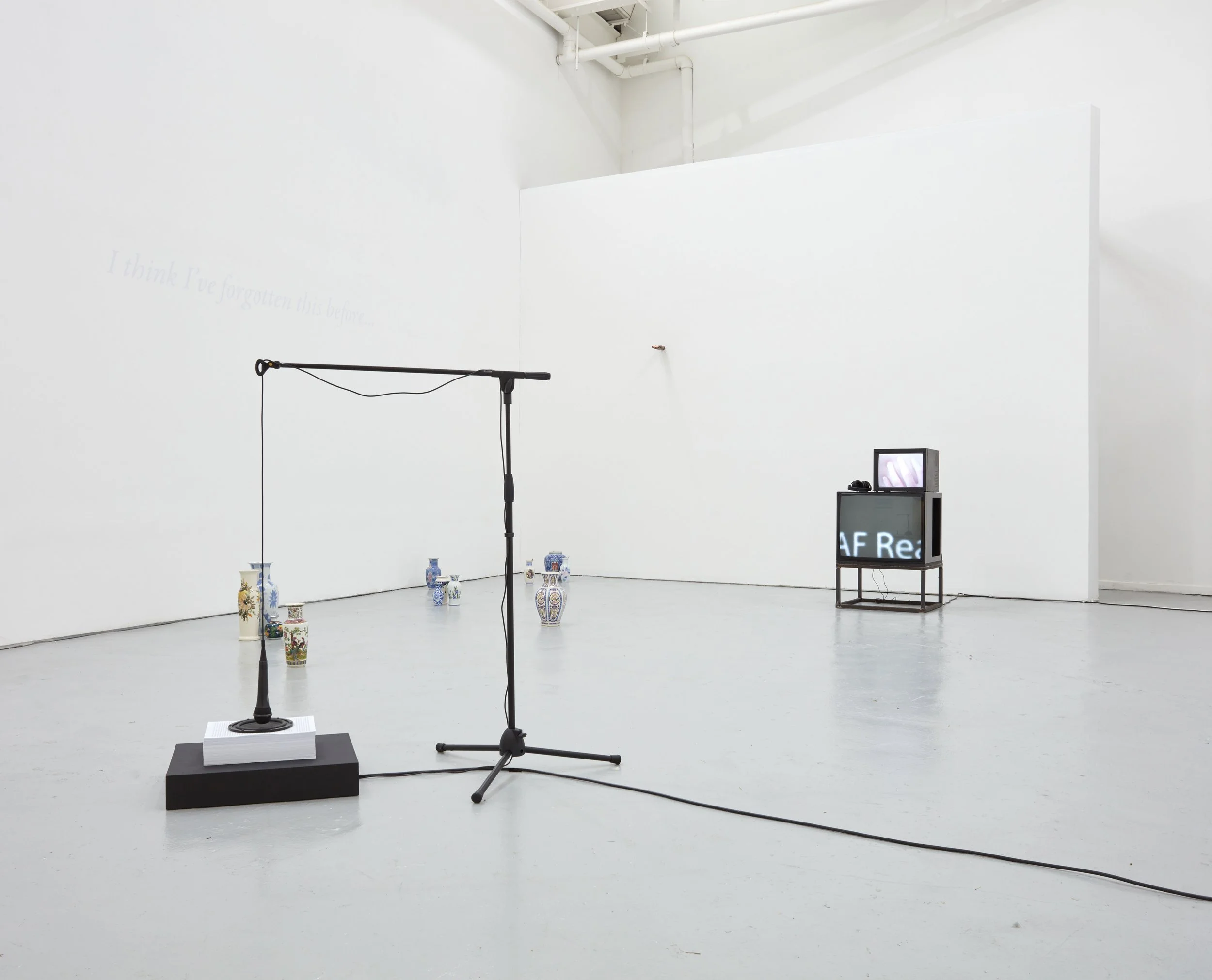
'Scaffold', (Kate Fahey, Adam Gibney, Jonathan Mayhew) The Bomb Factory Art Foundation, London, 2019. Curation and text by Séamus McCormack
A scaffold is a system of support that simultaneously provides a shell to protect a structure or an amalgamation of components, including language, images or concepts. They can be adaptable and altered in response to external and internal contexts or stimuli. In this exhibition, titled ‘Scaffold’, the term covers all of these elements, including contemporary digital braces and data platforms that support, maintain, enrich, enhance but also conceal and confound meaning and knowledge. The scaffolding we use daily in our online encounters can undermine other foundations and structures, in which case our scaffolds are fragmented and broken, only to be rebuilt in ever malleable and protean configurations that leave us without an understanding of their architectural reliability or accuracy of design.
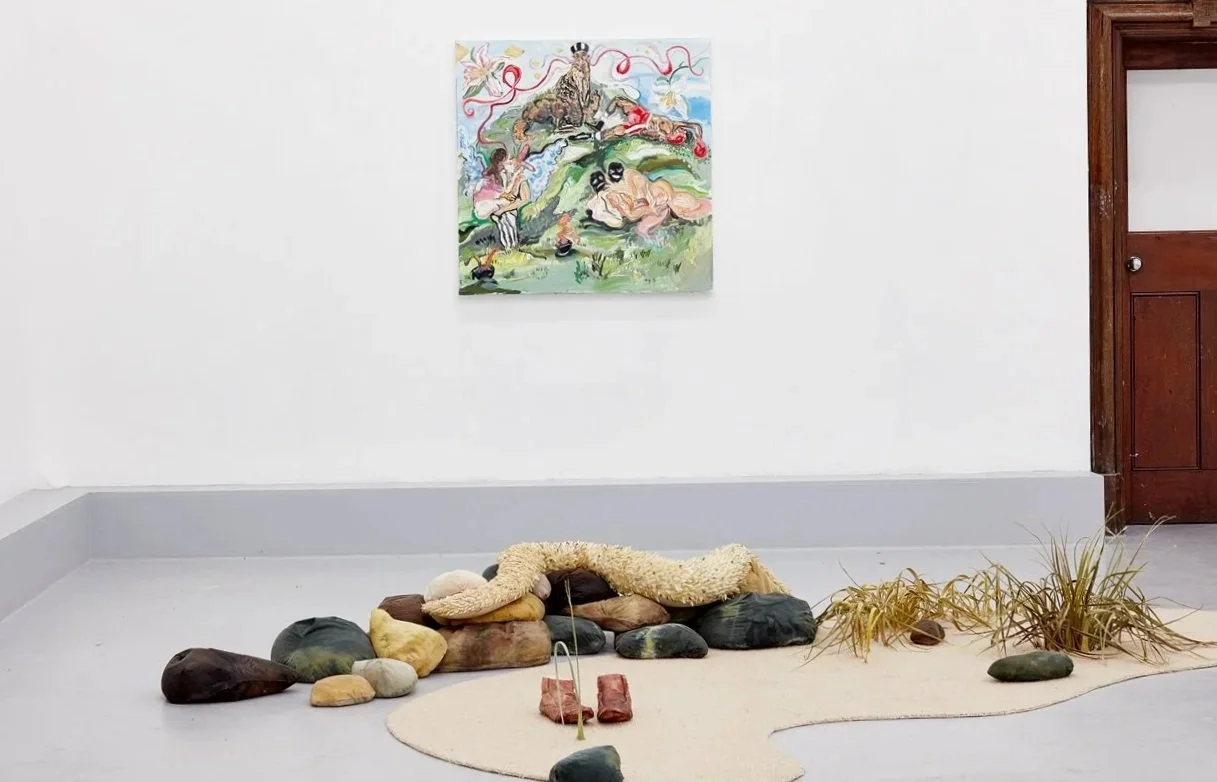
'Rain Wetting Thirst', Lewisham Arthouse, London, 2019. Curation and text by Séamus McCormack
In a poem by the Greek playwright and poet Angelos Sikelianos, titled ‘The First Rain’, he describes the turbulence of thunder before a shower, and the intoxication the narrator feels by this natural force. The time is spring, a sort of foreplay for summer, when we anticipate and dream of increasingly lighter and warmer months after the darkness of winter. Sikelianos, known for his use of symbolism, is overcome by heady fragrances, his nostrils quivering as scents fill the air, caressing the moisture with opened lips. The title of the exhibition ‘Rain Wetting Thirst’ is based on the lyrical stanzas from Sikelianos’s poem and the inspiration for the artworks included. The three artists in the exhibition, Luca Bosani, Jocelyn McGregor and Sheila Rennick, set up situations in which all of our senses are stimulated that aim to question how our desires, represented by fragrances, images, words and actions, might be satisfied but also remain unfulfilled, thirsty even.
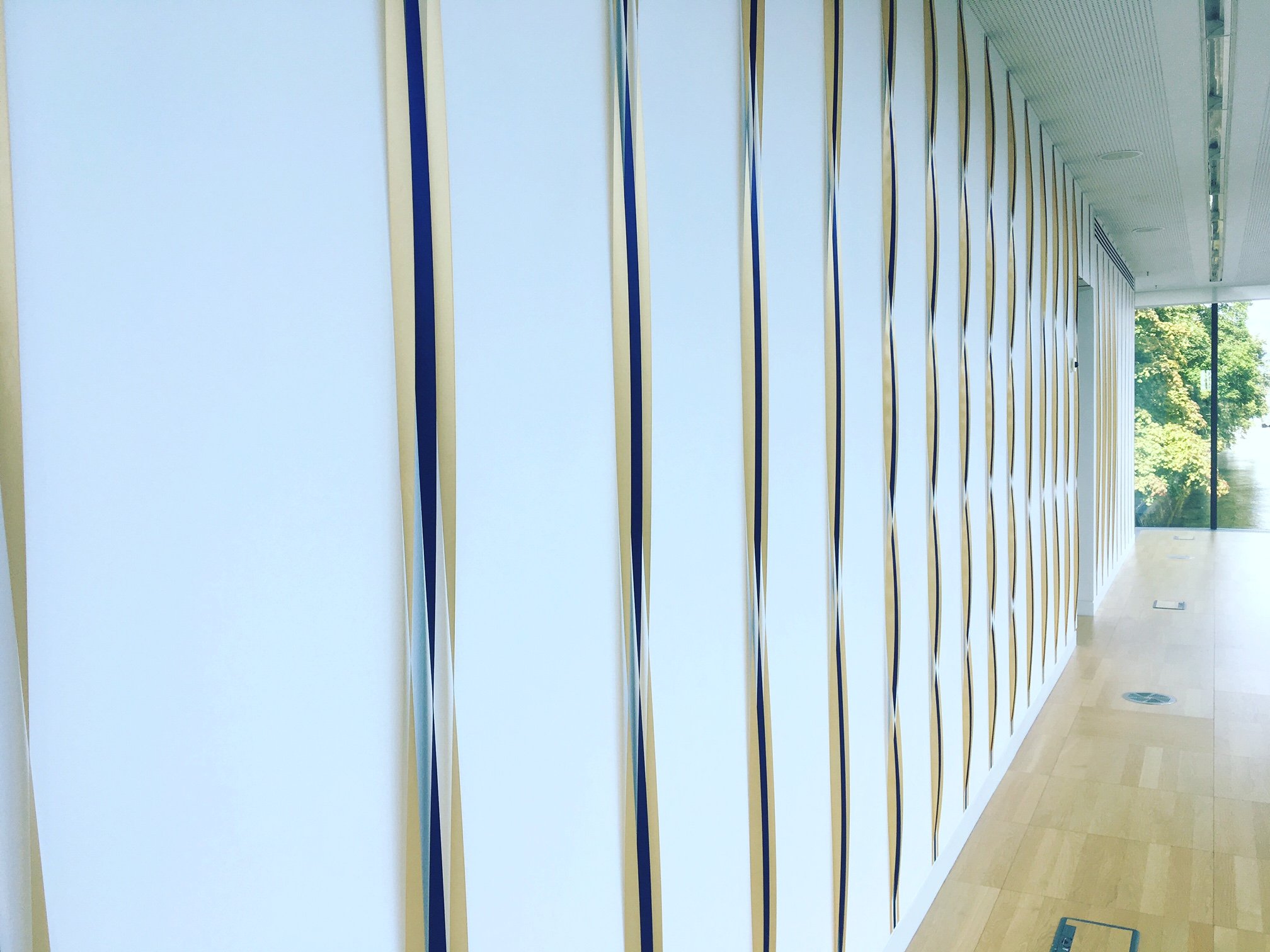
‘Jealous Wall’ (Niall de Buitlear, Janine Davidson, Adam Gibney, Miranda Blennerhassett, David Eager Maher) Luan Gallery, Athlone, 2018. Curation and text by Séamus McCormack
The ancient Greek poet Sappho in her variously interpreted Fragment 31 writes ’Neath the flesh impalpable fire runs tingling’. The verse has often been referred to as the poem of jealousy, as within each stanza Sappho describes the emotional upheaval caused by unrequited love and envy. The poems difficulty to comprehend is confounded by its missing last lines, meaning that the contemporary version is filled with fallacy and fiction as the original continues to be lost in time for eternity.
This exhibition Jealous Wall borrows its title from an architectural construction of the same name, which was built in the midlands of Ireland in Mullingar, Co. Westmeath, c.1760. The wall was designed as a sham ruin epitomising the eighteenth century interest in Gothic artifice and design. Like Sappho’s poem its history is embedded with envy, false truths and myth. The unique history behind that wall tells the sordid tale of a family squabble, in which Robert Rochfort, resentful of his brother George, built the structure in order to conceal the view of his neighboring sibling’s dwelling. The structure became both a physical and metaphorical barrier between the two men and now remains a symbol of dispute, jealously and pride.
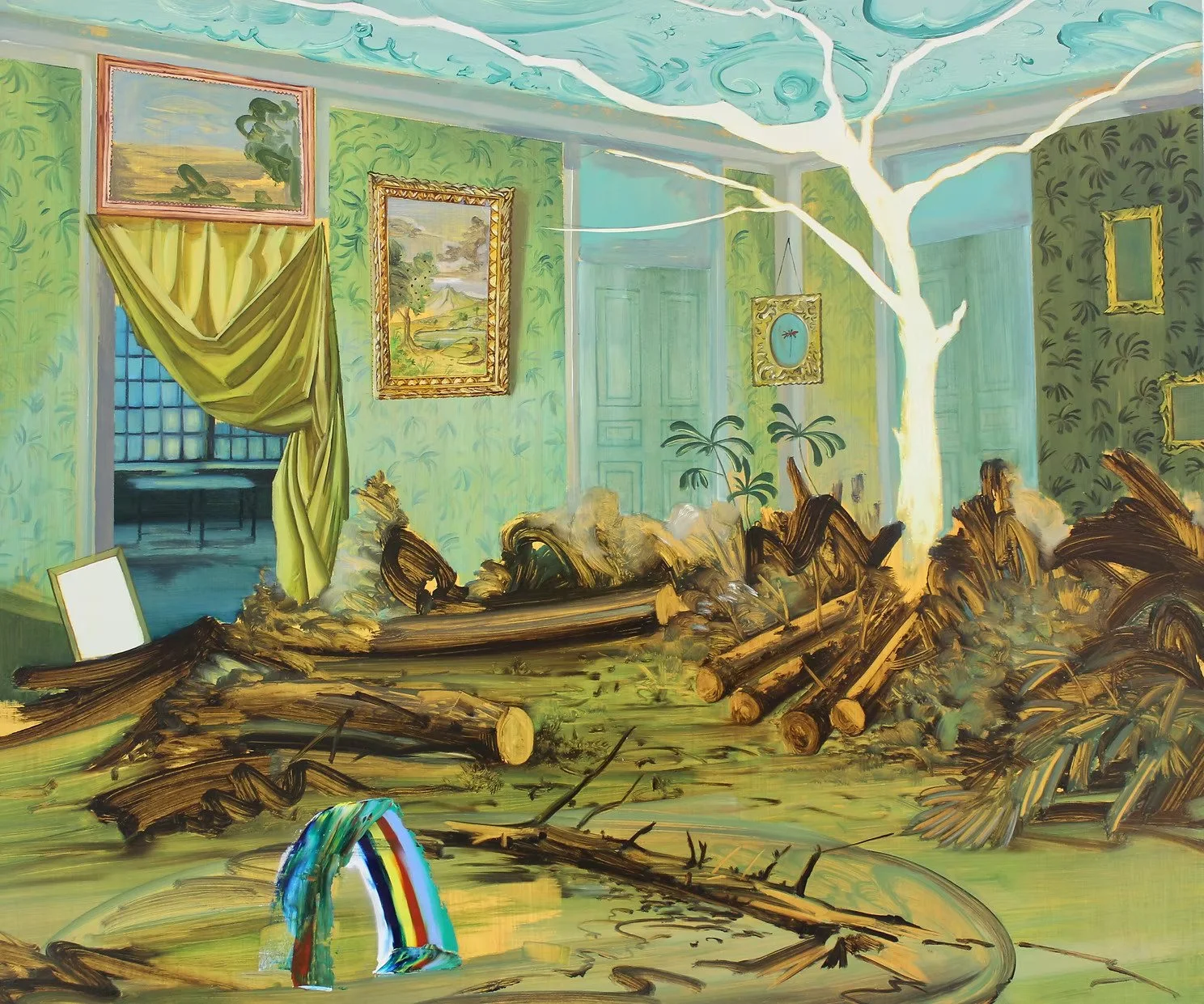
David Eager Maher ‘Locus’, Oliver Sears Gallery, 2017 Catalogue text by Séamus McCormack
In this series of oil paintings, David Eager Maher continues along a trajectory of previous works in which we are invited to enter imagined spaces that are at once exterior and interior. These intricate and detailed compositions combine fictional landscapes with realistic depictions of topographies and grand domestic spaces. The vistas include opulent architectural features such as arches, gables and columns; domestic furniture including empty chairs undressed tables; ornate urns and figurative carved sculptures; vacant parasols and unoccupied deck chairs.
The series, and the title of the current exhibition ‘Locus’ is complex in its associations, definitions and meanings. The term locus can be defined as being an ambiguous site, a location that is determined by varied and specified conditions. The word also has a place within the fields of mathematics, medicine and science adding more meaning to the references in the works. ‘Locus’ features a series of paintings that depict liminal spaces, in which no inhabitants can be observed, confounding the sense of peculiarity in the in-between scenes depicted.
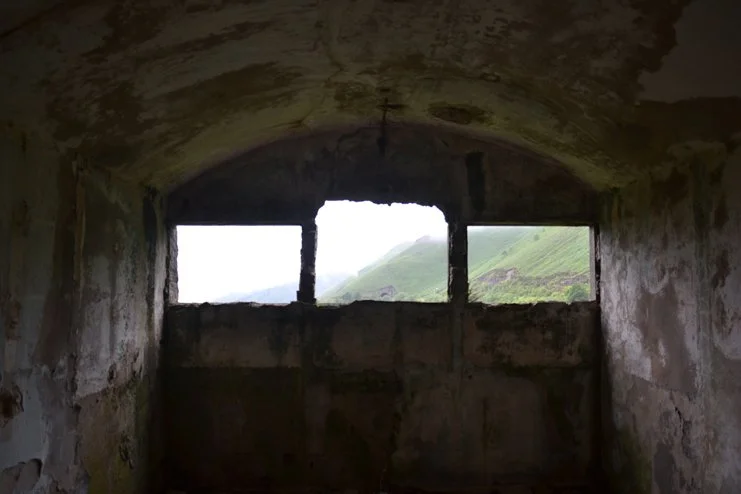
Janine Davidson, ‘Silhouettes and Shadows’, Mermaid Arts Centre, 2017. Catalogue text by Séamus McCormack
A now infamous legend by Ancient Roman philosopher, author and naturalist, Pliny the Elder, tells the story of how Dibutades, on the eve of her lover’s venture into war, marked the contour of his head on a wall, from the shadow cast by a burning lamp opposite the figure. This act, in order to memorise the departed man by creating his silhouette, has become a metaphor for mark making and in time the photographic and cinematic image. This act of projection, both in an actual and figurative sense, has been at the core of our understanding of how images are created. Janine Davidson’s varied practice, which includes film, video, installation and photography, takes the baton of Dibutades’ apparatus, in which the strategies of projection, framing and screening are made evident in her pictorial experimentation. Davidson’s work often uses memory as a starting point in its creation and conception. Her repeated use of contested geographical locations with subjective associations for both the viewer and the artist can trigger and challenge notions of commemoration, familiarity and remembrance through the use of specific sites and locations.